


Ever Wonder Why Your Grandparents Never Had to Buy Seeds Twice?
They didn't have to. They saved seed from this summer's garden and planted it next spring. Most seed on the store rack today is hybrid, and saved hybrid seed doesn't come back true. This vault holds 16,000+ open-pollinated heirloom seeds across 35 varieties: grow them, save the seed, plant it again. If the shelves ever go empty, that's food you can keep growing. You don't need a bunker. You need the bare minimum.
- 16,000+ seeds, 35 varieties
- Save the seed, replant it
- Open-pollinated, non-GMO
- 10-year freshness, sealed
Plan on three: one to plant, one for family, one sealed for the long haul. Buy 2, get 1 FREE.
Emergency Preparedness Sale: up to 67% off. Ends in
Try it for 30 days. Money back if you're not happy.
Note: This product is NOT available on Amazon. Watch out for cheap replicas. Only orders from minimls.com come with our 30-day money-back guarantee.
30-Day Money-Back Guarantee
Try it for 30 days. If you're not happy, email us and we'll refund you.

I've never had a harvest like this. Pumpkins, melons, tomatoes and greens out of one MINIMLS vault, all healthy and producing the whole season. Seeing my garden this full was more rewarding than I can say. I'm planting from it again next year.

I've lived long enough to know you can't always count on the system. I wasn't sure how hard the vault would be to use, but the first seeds I started came up faster than I expected. Having it set aside in case things ever get tight gives me real peace.
I've tried plenty of seed over the years and a lot of it does nothing. I planted a handful from my MINIMLS vault as a test, nothing fancy, and almost everything sprouted. That told me what I needed to know.
- Fast shipping
- 30-day money back
- 100,000+ happy customers
What's Inside the Vault
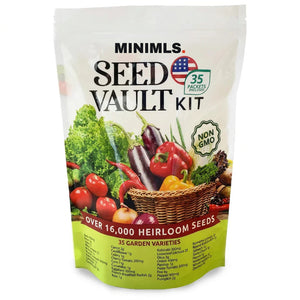
16,000+ heirloom seeds across 35 varieties, every one named. That's 30 crops. Lettuce comes in three varieties, and tomatoes, radishes and beans in two each, which is how 30 crops fill 35 packets.
- Fruiting crops: Roma VF and Large Cherry tomatoes, Sweet California Wonder bell pepper, Black Beauty eggplant, Marketmore 76 cucumber, Black Beauty zucchini, Waltham Butternut winter squash, Sugar Pie pumpkin, Early Bantam corn, Clemson Spineless okra, Hales Best Jumbo cantaloupe, Sugar Baby watermelon.
- Beans and peas: bush bean, Henderson lima bean, Sugar Daddy snap pea.
- Salad and greens: Parris Island Romaine, Black Seeded Simpson and Buttercrunch lettuce, Bloomsdale spinach, Vates Blue Scotch Curled kale, Fordhook Giant Swiss chard.
- Cabbage family and celery: Golden Acre cabbage, Long Island Improved Brussels sprouts, Waltham 29 broccoli, Snowball Y Improved cauliflower, Purple Vienna kohlrabi, UT 52-70 celery.
- Roots and onions: Scarlet Nantes carrot, Detroit Dark Red beet, Cherry Belle and French Breakfast radish, Purple Top White Globe turnip, Harris Model parsnip, Tokyo Long White Bunching onion.
- Herb: Genovese basil.
Every packet is labeled and resealable, with planting depth, spacing, sun and days to harvest printed on it. It all comes sealed in an airtight, moisture-resistant pouch.
Seed Quality
100% heirloom. 100% open-pollinated. Non-hybrid and non-GMO.
- Every variety reproduces true to type. Seed you save from your best plants grows the same plant again.
- No hybrids. Nothing labeled F1, nothing that breaks down when you replant it.
- No genetically modified seed. Just the old varieties, the way they were grown for generations.
- Names you may remember. Detroit Dark Red beets, Black Seeded Simpson lettuce, Bloomsdale spinach: old varieties families have grown and saved for generations.
How It Works
- Pick your packets. Start with three or four. Radishes, leaf lettuce and spinach are the easy first wins.
- Follow the packet. Depth, spacing, sun and days to harvest are printed on every one. It's a recipe, not a guess.
- Plant what you have. A raised bed, a few patio containers or a strip of backyard. Soil, water and sun. No special tools.
- Water, pick, eat. The fast crops are on the table in about a month.
- Save the seed. Keep seed from your healthiest plants, dry it and seal it. Next spring's garden comes from this one, and so does the one after that.
Will It Grow Where I Live?
Yes. It grows in every USDA zone. Zones measure how cold your winter gets, and that matters for trees. Garden vegetables never see winter: they go in after your last frost and come out before your first. So your frost-free window decides what you plant and when.
- Zones 1 to 4, short season: the fast crops first. Radishes at about 25 days, lettuce at about 30, then spinach, kale and bush beans.
- Zones 5 to 7, full season: the whole vault in one planting. Tomatoes, corn and squash all ripen.
- Zones 8 to 10, long season: everything, plus a second sowing of the fast crops for a fall harvest.
- Zones 11 to 13, year-round: cool crops through the winter, heat-lovers in spring and fall.
How Long Before Results
You'll see green in one to two weeks. You'll eat from it in about a month.
- Week 1 to 2: lettuce, radishes and basil sprout.
- Week 2 to 4: tomatoes, bell peppers and squash grow into strong seedlings.
- About a month: the first radishes and leaf lettuce are ready to pick.
- Week 6 to 9: spinach, bush beans and cucumbers come in, and the big crops follow.
You're not waiting all summer to find out if it worked.
Storage and Freshness
10-year freshness when stored properly. The seeds come sealed in an airtight, moisture-resistant pouch, because moisture is what ruins stored seed.
- Keep it somewhere cool and dry: a closet shelf, the pantry, the drawer with the flashlights.
- Every packet reseals, so the seed you don't plant this year keeps for the next.
- Plant this spring, or keep it sealed for years. It's ready either way.
That's what makes it a real backup. It doesn't have to be used to be worth having.
Shipping
Standard shipping is $4.95 and Express is $9.95. Delivery times are on our Shipping and Returns page. Every order ships the next business day, tracked and insured.
Seed is easy to buy when nobody's worried. Have yours in the drawer before everyone else wants it.

See what 16,000 seeds look like
Tap a video to pause or play.
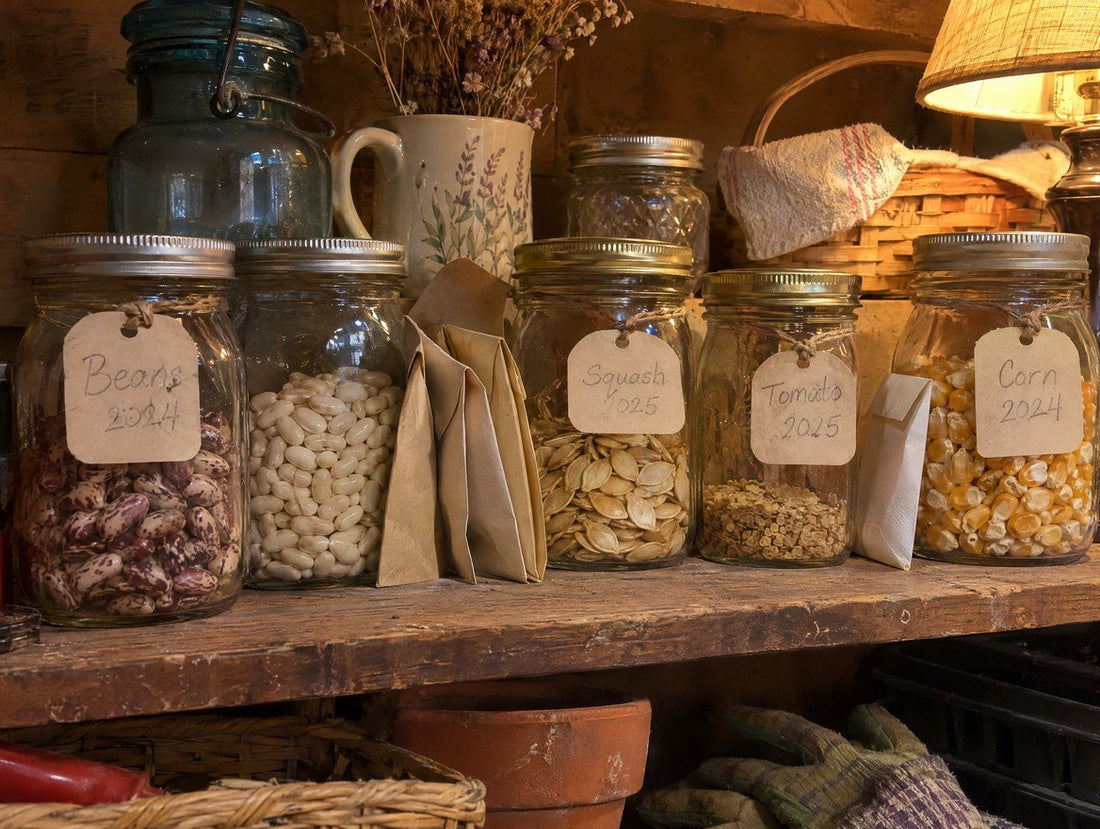
Their seed came back every spring. Yours doesn't.
Your grandparents saved seed from this year's garden and planted it the next. By the peak of World War II, Americans were growing 20 million victory gardens (National WWII Museum), and the USDA put their harvest at 42% of the nation's produce. Today most seed on the store rack is hybrid, sold with F1 on the label. It grows one good crop. Save that seed and plant it, and the second generation comes apart: stunted, uneven, and a good share never comes up. Growers call it F2 breakdown. So you buy again next spring, and the one after that. A seed that comes back is a customer sold once. A seed that doesn't is a customer sold every year. If the shelves ever go empty, a hybrid garden lasts one season. Every variety in this vault is open-pollinated, so what you save is what you sow.
Four questions to ask any seed vault
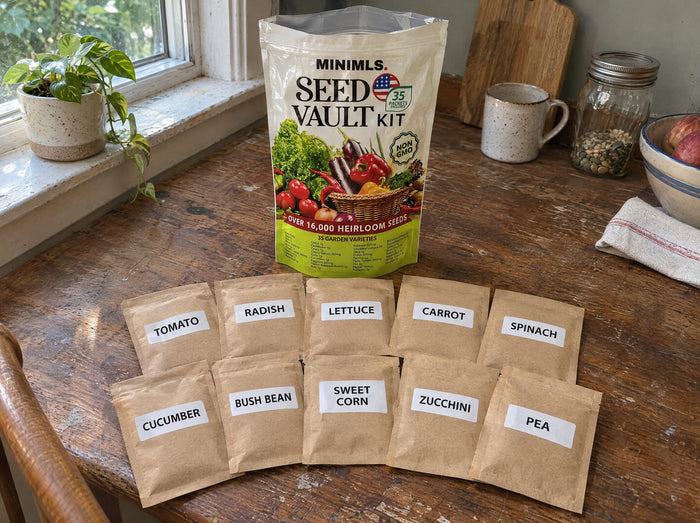
Can the seed reproduce?
Yes. All 35 varieties are open-pollinated, non-hybrid and non-GMO. Save seed from your harvest and plant it next spring, and every spring after that. Ask this one first: some boxes sold for emergencies are hybrid seed in a scarier package.
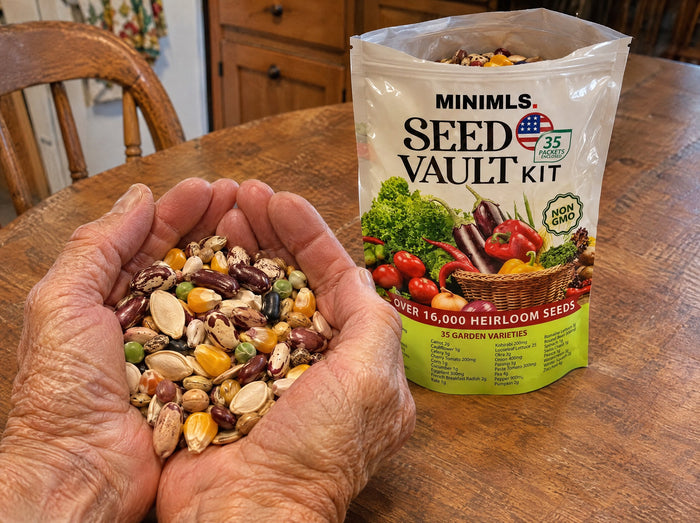
Is there enough of it?
16,000+ seeds. Not a sampler with a pinch in each packet. Enough for a full family garden, with seed still left in the box.
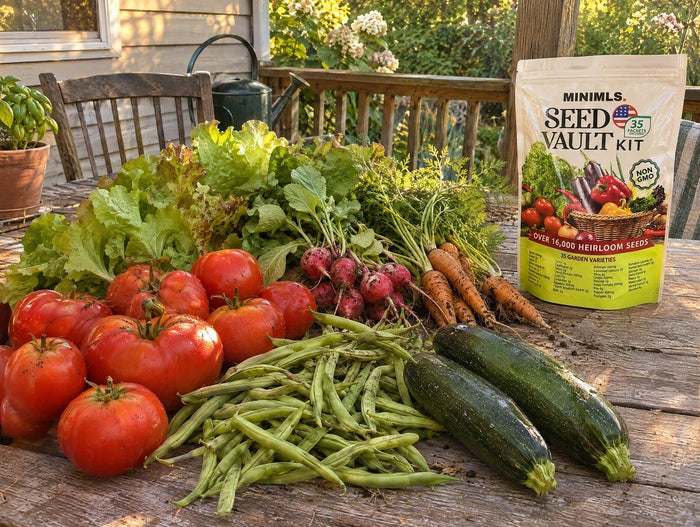
Can you eat from it?
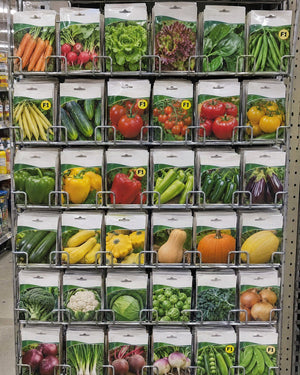
30 crops across 35 varieties: tomatoes, beans, squash, corn, greens, roots and melons. Every one is named on this page, down to the variety.
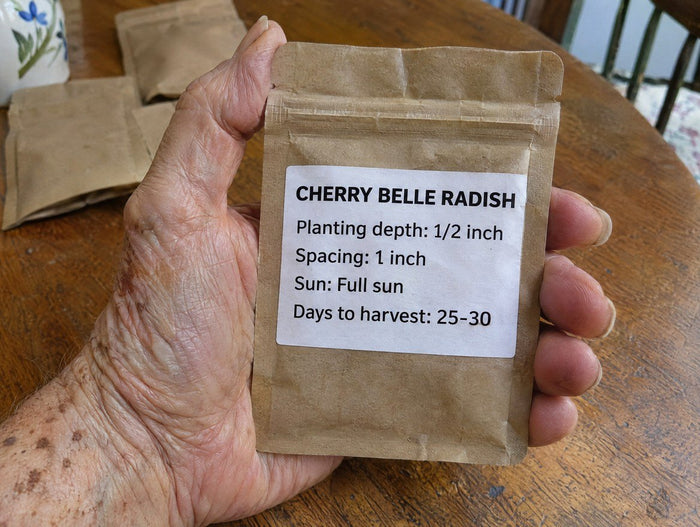
Does it tell you how and when?
Planting depth, spacing, sun and days to harvest, printed on every packet. Ask any seller all four questions, in writing, before you pay. We just answered them.
Buy 2, get 1 FREE: one to plant, one for family, one sealed.
Why not just buy seed every spring?
First harvest in about a month
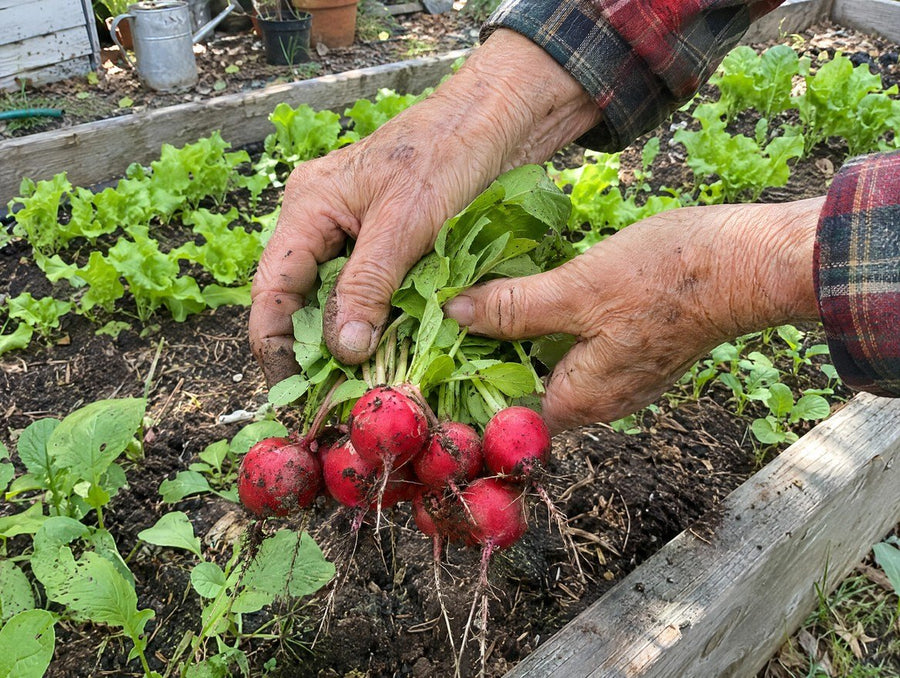
Sow the fast ones
Pick three packets: Cherry Belle radish, Black Seeded Simpson lettuce and Bloomsdale spinach. Follow the depth and spacing on the back. A raised bed, a patio pot or a strip along the fence is plenty.
Green rows
The radishes and lettuce are up, and now you know what you're holding. Start the tomatoes, bell peppers and squash.
First food on the table
Radishes at about 25 to 30 days, leaf lettuce at about 30. You're eating from your own ground before the month is out.
The garden fills in
Spinach at about 40 days, bush beans at about 55, cucumbers at about 60. Something is ready to pick every week.
The big crops
Broccoli and tomatoes come in, with butternut squash right behind. By now you've been eating from the garden for two months.
Save the seed
Take seed from your best plants, dry it and seal it. Next spring's garden is already in the drawer.
When the shelves go empty, seed keeps going.
What buyers say
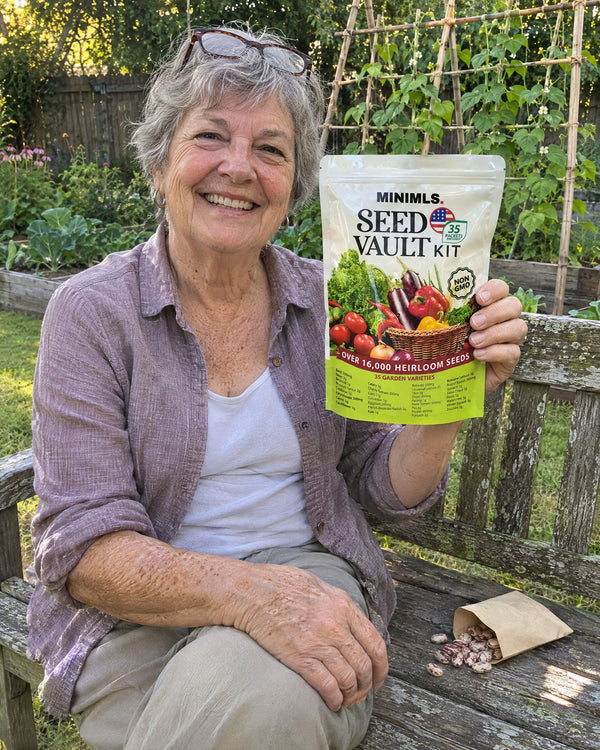
Every packet in this vault is open-pollinated, so this time the beans I saved are going right back in the ground.
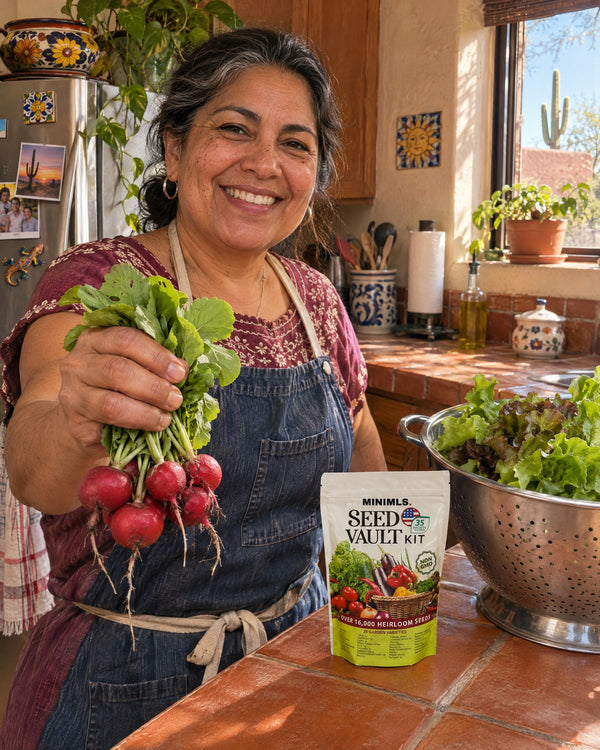
Never grew a thing before. Started with the radishes and lettuce and was eating from it inside a month.
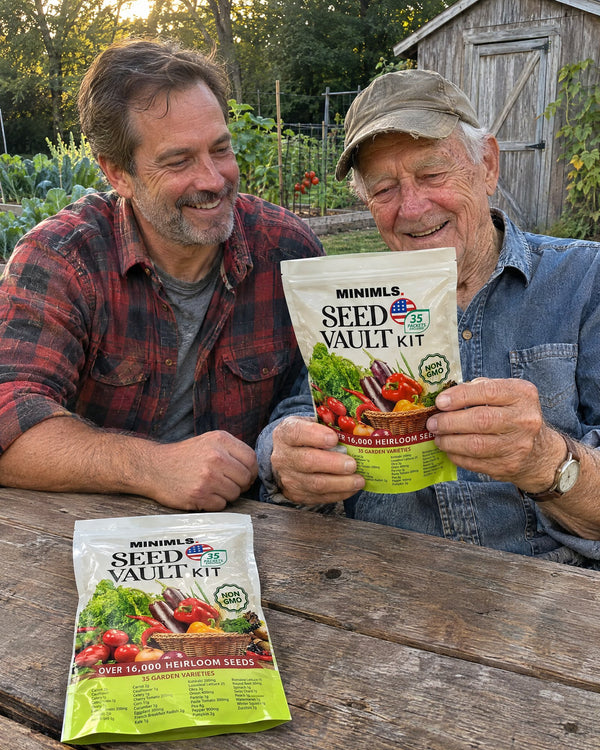
My dad has gardened 50 years and said the variety list beat what he usually buys. I got vaults for both of us.
 30Day guarantee
Test it. Don't just keep it.
Try it for 30 days. If you're not happy, email us and we'll refund you. Unused or used. The day it arrives, pull any three packets. Sow them in a pot on a sunny windowsill or a short row along the fence, and count the sprouts on day eight. You'll know what you're holding long before your 30 days are out. Then seal the rest and keep it for spring. If it isn't for you, email hello@minimls.com for your money back.
Minimum Recommended: Buy 2, get 1 FREE, $99.99.
Questions people ask
What makes these different from seed at the garden center?
Most seed on the rack today is hybrid, labeled F1. It grows one strong crop. Save the seed and plant it, and the next generation breaks down: uneven, stunted, and much of it never comes up. So you buy again every spring. Every variety in this vault is open-pollinated. Save the seed, plant it, and it comes back true.
Will these grow where I live?
Yes, in every USDA zone. Zones measure winter cold, and garden vegetables never see winter. They go in after your last frost and come out before your first, so your frost-free window decides what you plant and when. In a short northern season, start with the fast crops: radishes, lettuce, spinach, kale and bush beans.
I've never grown anything. Can I really do this?
Yes. Every packet tells you how deep, how far apart, how much sun and how many days to harvest. It's like following a recipe. Start with three packets: radishes, leaf lettuce and spinach. You'll be eating radishes and lettuce in about a month. Then plant the rest.
I don't have a big yard. Will it still work?
Yes. Raised beds, patio containers and a strip of backyard all work. A sunny balcony grows lettuce, radishes, basil, a bell pepper and cherry tomatoes in pots. Use what you have.
How long will the seeds keep?
10-year freshness when stored properly. They come sealed in an airtight, moisture-resistant pouch. Keep it somewhere cool and dry, and reseal each packet after you use it. Plant this spring, or keep it sealed for years. It's ready either way.
Why buy seed before planting season?
Because it keeps, and because seed is easiest to buy when nobody's worried. Sealed in its pouch, it waits in the drawer until your last frost. Want to see it work now? Basil, leaf lettuce and radishes grow in a pot on a sunny windowsill.
How do I save the seed?
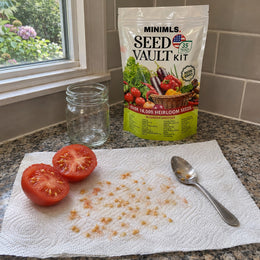
Start with the easy ones. Let a few bean and pea pods dry on the plant, then shell them. Scoop the seeds from your best ripe tomato, let them sit in a little water for a few days, then rinse and dry them. Pull the seeds from a fully ripe red pepper and let them dry. Dry everything well, label it and seal it. That's next year's garden.
Are these GMO or hybrid seeds?
No. All 35 varieties are 100% open-pollinated heirlooms: non-hybrid and non-GMO. Nothing labeled F1.
Is the sale real?
Yes. These are the Emergency Preparedness Sale prices, and the countdown on this page runs to the real end of the sale. With Buy 2, Get 1 FREE, 3 vaults are $99.99. With Buy 3, Get 2 FREE, 5 vaults are $149.99.
Is it worth buying more than one?
Yes. A seed line kept in one place is just a box. Plan on three: one to plant, one for family, one sealed for long-term storage. Buy 2, Get 1 FREE: 3 vaults for $99.99, about $33 each. Buy 3, Get 2 FREE covers grown kids or a parent in another state too: 5 vaults for $149.99, about $30 each.
I'm not a prepper. Isn't this a bit much?
It's a box of garden seed. Twice in the last century, America asked its families to grow their own food. In 1917 and 1918, garden plots went from 3 million to 5.2 million in a year (Architect of the Capitol). By the World War II peak there were 20 million+ victory gardens (National WWII Museum, National Park Service). Nobody called them preppers. You don't need a bunker. You need the bare minimum.
What if nothing comes up?
Then you get your money back. Sow three packets the day it arrives, in a pot or a short row, and count the sprouts on day eight. Try it for 30 days. If you're not happy, email us and we'll refund you.
How fast does it ship?
Standard shipping is $4.95 and Express is $9.95. Delivery times are on our Shipping and Returns page. Every order ships the next business day, tracked and insured. Order now and it's in the drawer before you need it.
What if I don't like it?
Try it for 30 days. If you're not happy, email us and we'll refund you. Unused or used. Just email hello@minimls.com.
Customer photos (4)
I've lived long enough to know you can't always count on the system. I wasn't sure how hard the vault would be to use, but the first seeds I started came up faster than I expected. Having it set aside in case things ever get tight gives me real peace.
Groceries keep going up and it was stressing me out. I didn't buy this to become a gardener, just as a backup. The few seeds I tried grew easier than I expected. Now I feel like I have some control if prices keep climbing.
I've tried plenty of seed over the years and a lot of it does nothing. I planted a handful from my MINIMLS vault as a test, nothing fancy, and almost everything sprouted. That told me what I needed to know.
I'm not a hardcore prepper, I just like having options. Planted some to see what would happen and nearly all of it came up. That's when it clicked: this is one of those things you want before you need it.

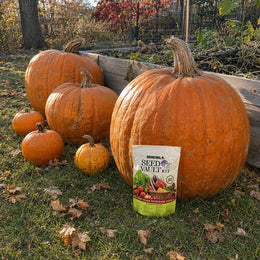
Everything grew so well. The pumpkins came in big, healthy and nicely shaped, and the plants were easy to look after. I'll be planting from this vault again next season.
Tomatoes, peppers, lettuce, broccoli and herbs, all from one MINIMLS vault. Healthy, productive and easier than I thought. We've already had several fresh harvests.

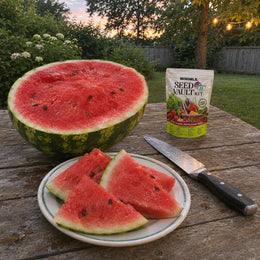
The watermelons grew beautifully from start to finish. Cutting into the first ripe one and sharing it with my family made the whole thing worth it.

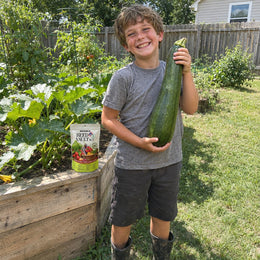
Got it for my 9-year-old grandson. He grew zucchini, tomatoes, pumpkins, all kinds of vegetables, and he's already asking when we plant again.
I saved store seed for years and always got weaker plants, and nobody told me why. Every packet in this vault is open-pollinated, so this time I'm saving my own seed the right way.
My dad has gardened for 50 years and said the variety list beat what he usually buys. After seeing his packets I ordered my own vault.
Started with the radishes and lettuce like the page suggested and was eating from it inside a month. Planting the rest now that I know it isn't hard.

Saved seed from my tomatoes this fall and it finally worked. It was hybrid seed failing me before, not me. Next spring I'm replanting from my own harvest.
The onions grew larger and healthier than I thought they would, with strong green tops and great color. Excellent harvest.
This is my third year with these seeds. Every packet comes up if you halfway know what you're doing, and it produces food every time. With fresh food this expensive, that matters.
Every variety comes in its own labeled envelope, exactly like the photos, and it arrived sooner than I expected.

Plant it before you need it.
It waits sealed on a shelf. The day you need food, you plant it.