


The Power's Out. Your Phone Doesn't Have to Be.
When the grid goes down, your phone becomes the flashlight, the radio, the map and the only way to reach your kids. Then the battery icon turns red. This 10,000 mAh power bank holds about two full phone charges, and the solar panel keeps it alive after the wall can't. Charge it today, drop it in the drawer, and the day the lights go out you have hours of phone instead of minutes.
- 10,000 mAh, about 2 charges
- Recharges by sun or wall
- Wireless pad + 3 ports
- Flashlight with SOS
Most households keep one in the house and one in the go-bag.
Emergency Preparedness Sale: up to 67% off. Ends in
Try it for 30 days. Money back if you're not happy.
Note: This product is NOT available on Amazon. Watch out for cheap replicas. Only orders from minimls.com come with our 30-day money-back guarantee.
30-Day Money-Back Guarantee
Try it for 30 days. If you're not happy, email us and we'll refund you.
Ice storm in February took the power for two days. Phone stayed charged off this the whole time, and when it ran down I set it in the kitchen window. My son got our texts both nights.
No cords to find in the dark. Phone goes on top, green light, done. I'm 74 and it took me one try.
Ran my phone flat on purpose, twice. The bank filled it both times with a sliver left over.
- Fast shipping
- 30-day money back
- 100,000+ happy customers
How It Works
- Charge it before. Plug it into the wall with the built-in cable or any USB-C cord. With 20W fast charging it fills quickly, then holds the charge in a drawer.
- Charge your phone during. Lay the phone on the wireless pad or plug into USB-C or USB-A. The 10,000 mAh battery gives a typical phone about two full charges.
- Top it up with the sun after. When the outage outlasts the battery, set the solar panel in a window or clip it to a bag outside. Solar is slow, and that's fine. It's the backup to the backup.
- Light the room. The built-in dual LED flashlight has steady, SOS and strobe modes, and sips power so slowly it runs for days.
What It Does, and What It Doesn't
It keeps phones alive through an outage: about two full charges for a typical phone, then slow top-ups from the sun.
It won't run your fridge or your heater. For that you'd need a generator the size of a suitcase. This is for the thing you'll actually be holding: the phone with the forecast, the flashlight and your family on it.
- Solar is a trickle, like any panel this size. A day in good sun adds a partial charge. Charge it from the wall first and use the sun to stretch it.
- Wireless charging is slower than the cable. Use the cable when you're in a hurry.
- It's weather-resistant, built for rain and drops. Don't leave it underwater.
- The battery loses a little charge sitting, like every battery. Top it up every few months.
Shipping
Standard shipping is $4.95 and Express is $9.95. Delivery times are on our Shipping and Returns page. Every order ships the next business day, tracked and insured.
Neither one beats a storm that's already on the forecast. That's the reason to order before you need it.
What's in the Box
One Emergency Power Bank per unit, with the charging cable built into the body, the solar panel built into the face, and a carabiner clip with a compass for the go-bag.

See it in use
Tap a video to pause or play.
In an outage, your phone is everything. Then it's nothing.
In October 2026, Hurricane Isaias left more than 900,000 customers without power (Scripps). When that happens, the phone becomes the flashlight, the news and the lifeline, and everyone's battery starts falling at the same time. The outlets are dead too. A charged power bank in the drawer means your family's phones get through the night, and the solar panel means they get through the week.
Charge it once. It waits for the day you need it.

Every phone in the house
A wireless pad on the front, USB-C and USB-A out, and the charging cable built into the body. iPhone or Android, new or old, it charges without hunting for the right cord.

10,000 mAh, honestly rated
About two full charges for a typical phone, or one phone and a pair of hearing aids, lamps and radios along the way. Enough to get a household through the worst nights.
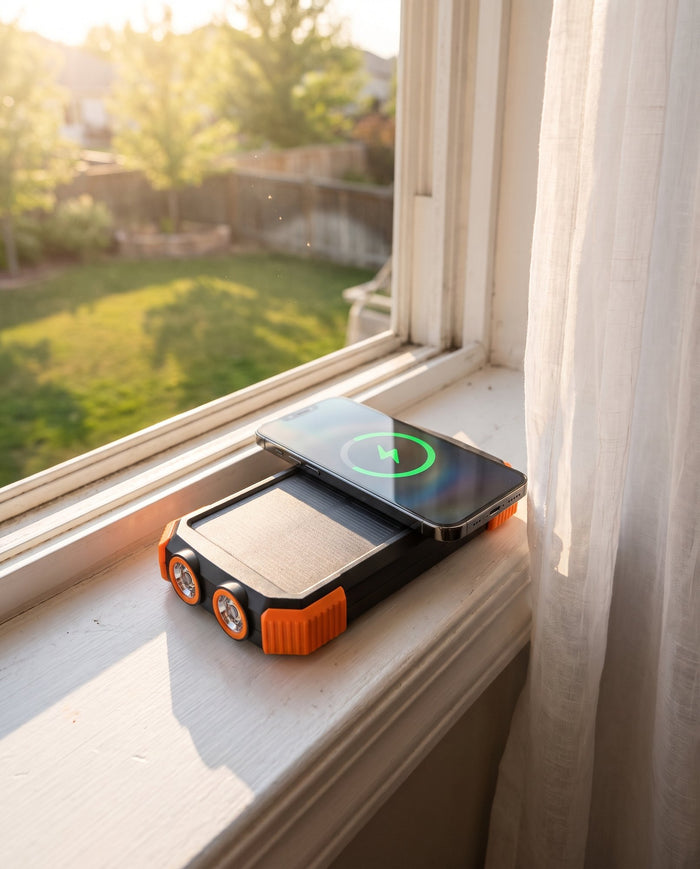
The sun is plan B
The built-in panel tops it up anywhere there's daylight. It's slow, like every pocket panel, and it's the difference between a dead brick and a phone that comes back every afternoon.
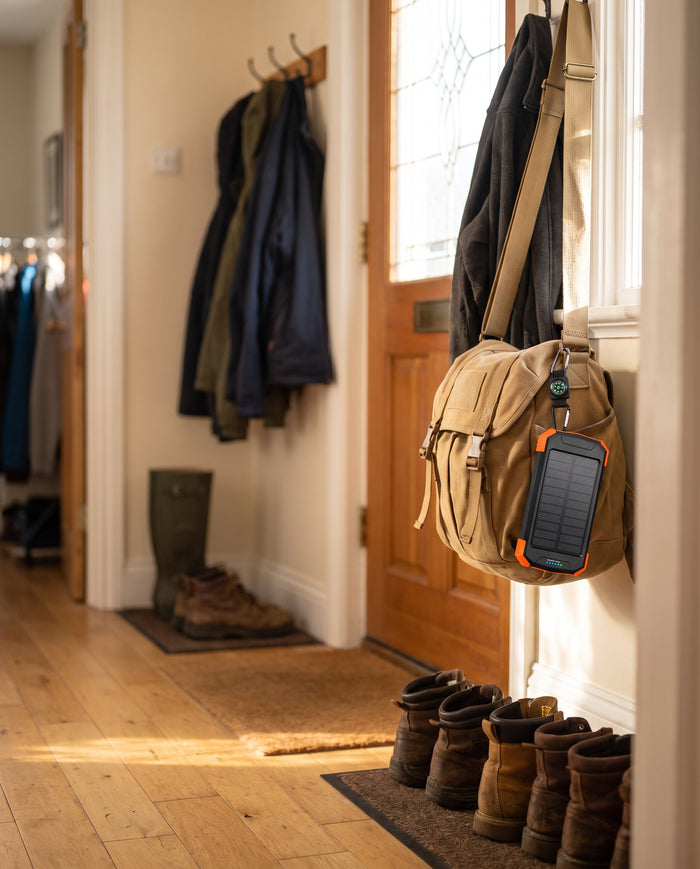
Made to be grabbed
Rubber corners for drops, weather-resistant shell for rain, a carabiner with a compass for the bag by the door. The flashlight's SOS mode is there if you need to be found.
One for the house. One for the go-bag.
Why not just a regular power bank?


Four days without power, one drawer away
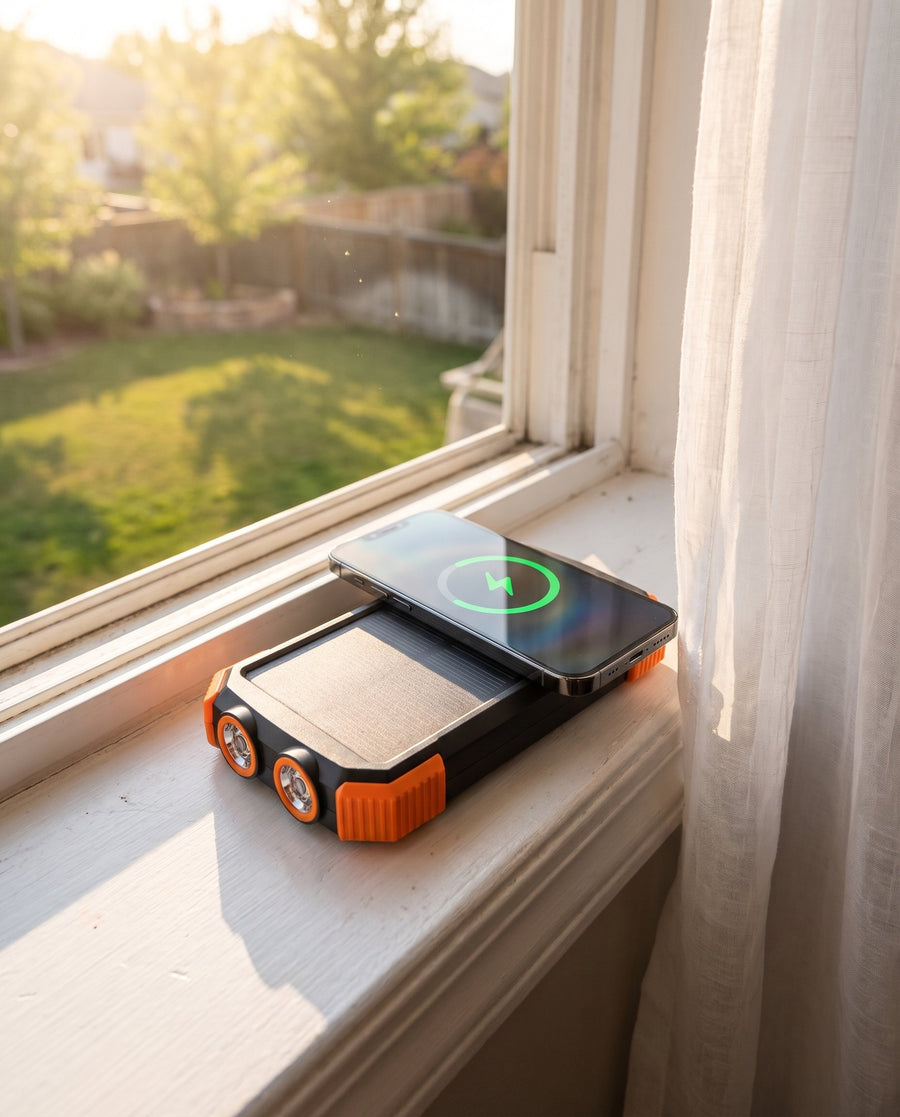
The lights go
The storm takes the grid at dinner. Your phone says 41%. You take the power bank out of the drawer, where it's been charged since the day it arrived.
First charge
You lay your phone on the pad while you listen to the radio. It's full by bedtime, and the flashlight gets the kids to bed without burning a candle.
The house phones line up
Your phone, your spouse's, the old iPad with the games on it. The bank gives about two full charges, so you ration: texts on, video off.
Into the window
The bank runs low. You set the panel in the south window after breakfast. By late afternoon it has enough to top both phones up again.
The power's back
The fridge hums on. You plug the bank into the wall, fill it, and put it back in the drawer for next time.
When the grid goes down, the phones go with it.
What buyers say

Two days of ice storm, two phones kept alive. When it ran down I set it in the kitchen window and it came back.

I can't fuss with cords in the dark. You lay the phone on top and it charges. That's why I picked this one.
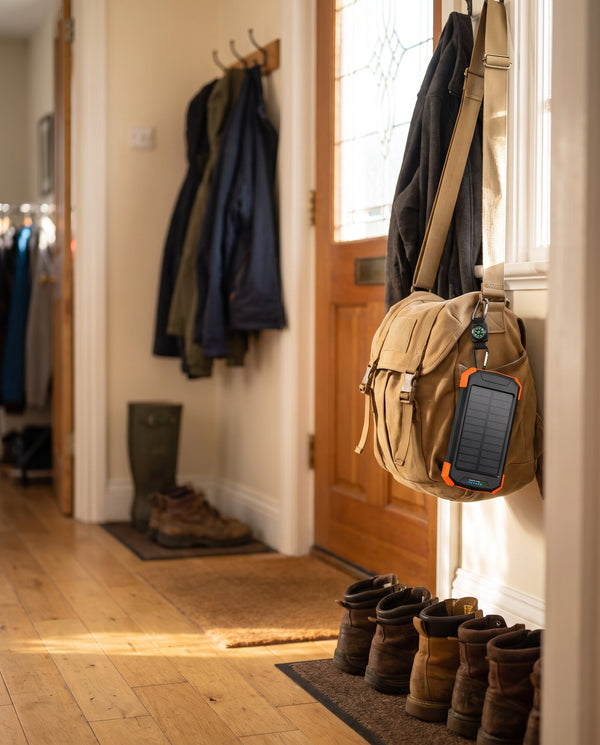
Clipped to my go-bag with the compass hanging off it. Charged it in March, checked it in September, still near full.
 30Day guarantee
Test it before you need it
Try it for 30 days. If you're not happy, email us and we'll refund you. Unused or used. Charge it, run your phone off it for a week, set it in a window and watch it climb. You'll know inside 30 days. If it isn't for you, email hello@minimls.com for your money back.
Minimum Recommended: 2 power banks, $89.99.
Questions people ask
How many times will it charge my phone?
About two full charges for a typical phone from the 10,000 mAh battery. A big new phone gets a little less, an older or smaller phone more. Buyers give it 4.7 stars across 487 reviews. Test it on your own phone inside your 30 days.
Does the solar charging really work?
Yes, and it's slow, like every panel that fits in a pocket. Think of the sun as the way the bank comes back to life during a long outage, not the way you fill it day to day. Charge it from the wall first. In an outage, a day in a bright window adds a meaningful top-up.
How do I charge my phone off it with no cable?
Lay the phone on the front of the bank and press the button. The wireless pad charges any phone that supports wireless charging, which is most phones from the last several years. There are also USB-C and USB-A ports if you have your cable.
How long does it hold a charge in a drawer?
Months. Every battery loses a little sitting, so top it up when the clocks change and it'll always be near full when you reach for it.
What's the flashlight like?
A dual LED light with three modes: steady, SOS and strobe. It draws so little that the light runs for days on a charged bank. The SOS mode is for being seen and found. You turn it on yourself.
Is it waterproof?
It's weather-resistant: rain, splashes and drops are what the rubber shell is for. It's not made to be dropped in a puddle or used underwater.
Can I take it on a plane?
Yes, in your carry-on. At 10,000 mAh it's well under the airline battery limit. Airlines want power banks in the cabin, not in checked bags.
Will it charge an iPhone and an Android?
Yes. The wireless pad, USB-C and USB-A cover both, and the built-in cable means there's always at least one way that works with no cord hunting.
Can it run a CPAP, a fridge or a heater?
No. It's a phone-and-small-devices battery, not a generator. It'll charge phones, earbuds, hearing aids and anything else that charges by USB. For medical equipment, talk to the device maker about a proper battery.
Why not just use the power bank I already have?
If it's charged, use it. Most commuter banks are smaller, can't recharge without an outlet and have no light. This one waits in a drawer, holds about two charges and comes back from the sun when the outage outlasts it.
Is it worth buying two?
Yes. One stays home, one lives in the go-bag or the car. Two cost $89.99, which is $9.99 less than two singles. The Household Planner can help you work out how many phones you're covering.
I'm not a prepper. Isn't this overkill?
It's a phone charger. You already own three. This is the one that still works when the wall doesn't, and the one you'll hand your grandchild when their phone dies at Thanksgiving.
How fast does it ship?
Standard shipping is $4.95 and Express is $9.95. Delivery times are on our Shipping and Returns page. Every order ships the next business day, tracked and insured. Order before the storm is on the forecast.
What if I don't like it?
Try it for 30 days. If you're not happy, email us and we'll refund you. Unused or used. Just email hello@minimls.com.
Ran my phone flat on purpose, twice. The bank filled it both times with a sliver left over.
No cords to find in the dark. Phone goes on top, green light, done. I'm 74 and it took me one try.
Left it on the dash all afternoon and it gained about a third. Fine by me, that's the emergency plan, not the everyday plan.
One in the kitchen drawer, one in each glovebox. The clip goes right on the bag strap.
It's a brick compared to my slim one. That's the battery and the rubber. I'd rather have the weight.
Power was out three nights in January. We used the light more than the charging, honestly. Both worked.
The cord you always forget is attached to the thing. Whoever thought of that, thank you.
We sat in the dark with dead phones last time. Not doing that again. This sits charged in the hall table.
Didn't expect to care about the carabiner compass. My grandson thinks it's the best part.
The pad is handy but slow. Cable charges much faster. Use the pad overnight, cable in a hurry.
A weekend of two phones and a headlamp recharge. Sun brought it partway back each day. Sold.
Bought three at Christmas, one per household. Everyone's used theirs at least once already.
Arrived in five days, held a charge since. Does what the page says, no more, no less.
Sits next to the filter straws and the radio. The outage drawer is officially full.
Four blue dots, easy to read. I check them monthly when I check the smoke alarms.
Fourteen hours without power and nobody's phone died. That was the whole job and it did it.

Charge it before the lights go out.
It waits charged in a drawer. The day the power fails, your phones get through it.